
Young and elderly in particular are more likely to use debit cards at checkout
The share of debit card payments in the total number of payments at the checkout remained unchanged at 80% in 2024, but there were notable outliers among certain age groups. In particular, young people between 12 and 18 years old and seniors between 65 and 74 years old paid more often with a debit card, mobile phone or smartwatch than a year earlier. This is according to research conducted jointly by Betaalvereniging Nederland and DNB.
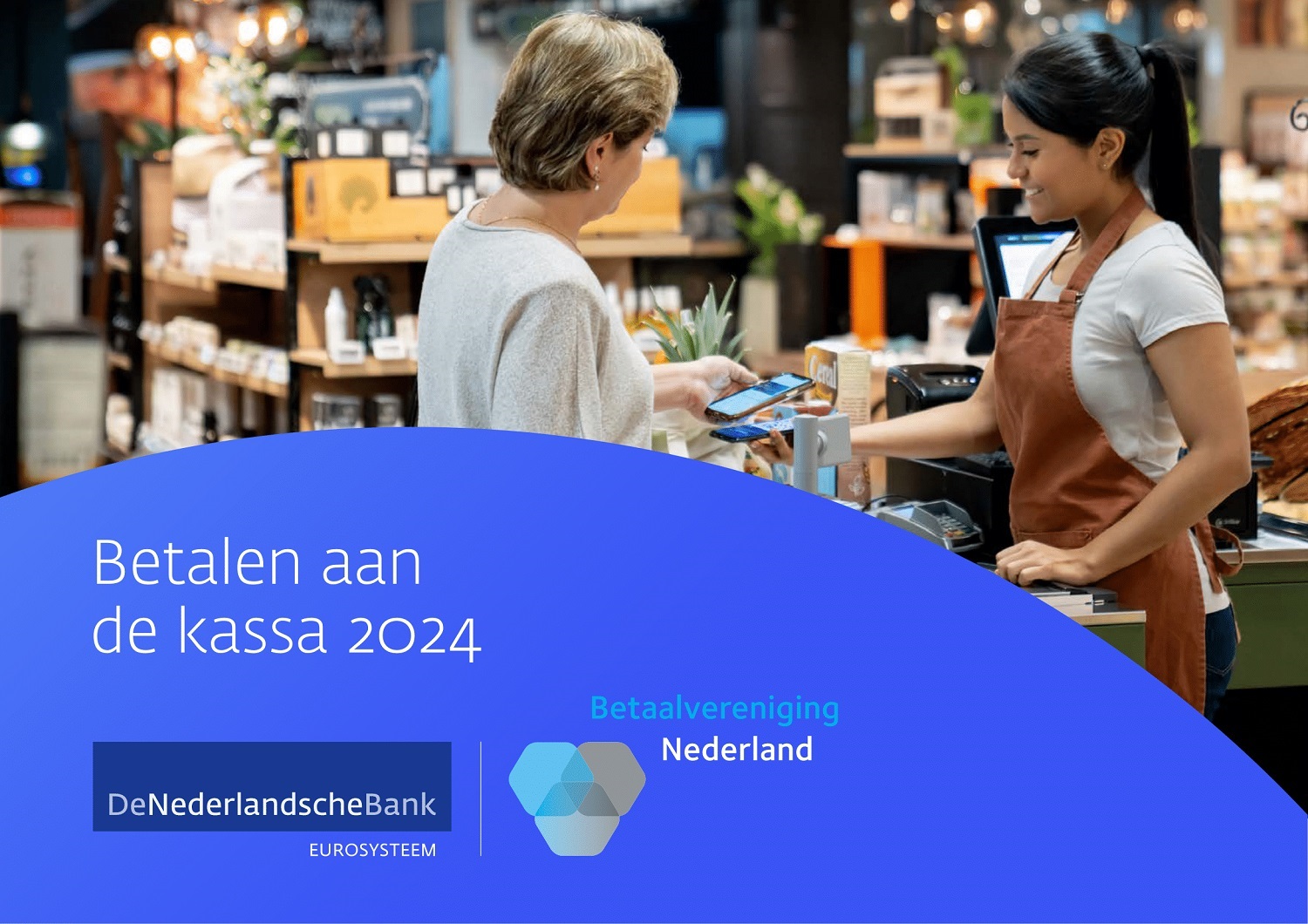
Young people between 12 and 18 made more debit card payments last year than in 2023. The share of debit card payments in this age group increased by 6 percentage points, from 78% in 2023 to 84% in 2024. Seniors aged between 65 and 74 also pinned more often, with the share of debit card payments rising 3 percentage points, from 75% to 78% (see Figure 1). For most other age groups, the share of debit card payments decreased slightly or remained the same, leaving the overall share of debit card payments unchanged in 2024.
Mobile payments increasingly popular
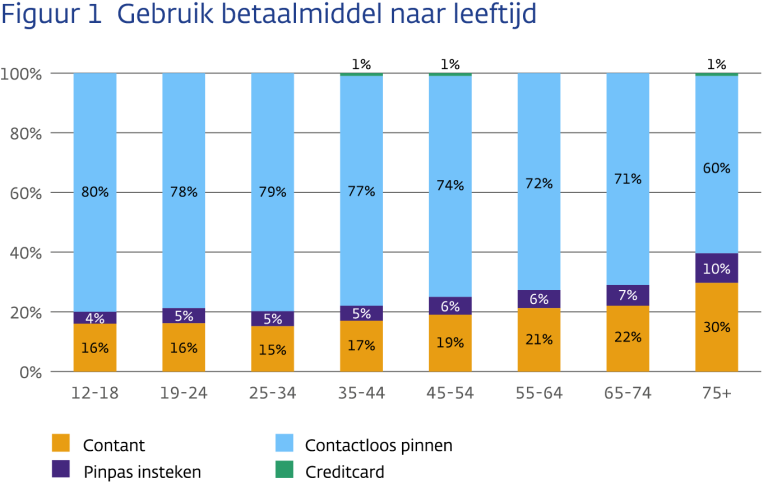
The number of payments at the till increased by 3% to 7.2 billion transactions in 2024. Of these, 19% were paid with cash and the rest with a debit card, either digitally with a mobile phone or smartwatch or otherwise. Less than 1% of all payments were paid by credit card. The value of all those payments increased by 4%, to €178 billion. Interestingly, the value of all cash payments at the checkout rose sharply ( 11%), while the number of cash payments remained almost the same.
Of all payments at the till, 80% are debit card payments, as in previous years. The share of mobile debit card payments at the checkout has risen again, although this increase is levelling off in 2024 compared to previous years (see Figure 2). With the rapid advance of digital payment cards on a mobile phone or smartwatch, Dutch retailers now support contactless payment options anywhere and anytime.
Over 6% of payments at the checkout still involve inserting the debit card into the machine. Five years earlier, the figure was 24%. Especially for high amounts, consumers insert their debit card more often when they can also pay contactless. For amounts above €50, however, the PIN code must always be entered when using the debit card.
Mutual payments more often electronic
Mutual payments – to family, friends, colleagues and acquaintances and for school, sports and other informal activities – are also included in the survey. These payments include an increase in electronic payments, mostly through a payment request such as Tikkie.
The number of mutual payments increased by 5% to 584 million by 2024. Of these, 64% were electronic, up 4 percentage points from a year earlier. In fact, the value of those mutual payments rose 23% to €29.2 billion. Of that, €20.4 billion (70%) was paid electronically.
Electronic mutual payments also saw the strongest growth among young people aged between 12 and 18 and among the elderly. The share of electronic increased among young people by 6 percentage points to 70%. Among people aged between 55 and 74, that share rose even more sharply, by 8 to 9 percentage points.
Gerelateerde artikelen
-

Payments newsletter: Betaaljournaal 34
-
Payments newsletter
-
-

Stablecoins: ‘protecting and participating’
-
News
-
Crypto
-
-
Reply to stablecoins is wholesale CBDC, not retail digital euro
-
News
-
Crypto
-
-

BIC and Identifier ‘VPAYNL22’ removed from SEPA BIC list
-
News
-
IBAN and BIC
-
-

New agreements should improve access to business checking account
-
News
-
Special accounts and services
-
-
Scams tap into migration of iDEAL to Wero
-
News
-
Security
-