
Digital euro
What is the digital euro?
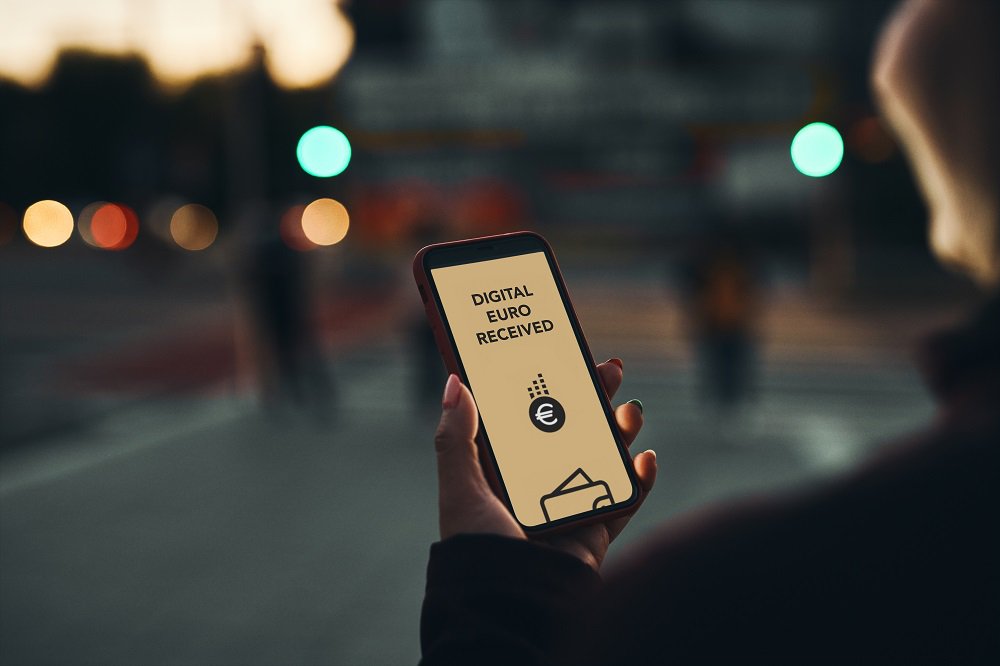
The digital euro is intended as public digital money, similar to public cash, but in electronic form. Unlike digital money in a bank account (in Dutch), the digital euro is a direct claim on the ECB, rather than on a commercial bank. This means that the central bank guarantees every digital euro. This offers more guarantees than a digital euro held at a private bank, which could go bankrupt.
The digital euro should be a supplement to cash and existing forms of payment; it should not replace existing means of payment.
Purpose and social context
The advent of the digital euro raises a variety of social and political questions.
A solution in search of a problem?
In countries such as the Netherlands, where payments are reliable and efficient, the need for a digital euro is disputed. The construction costs are high, while the concrete benefits appear limited.
Privacy and supervision
There are concerns about the protection of personal data and the role of central parties in viewing transaction data. The ECB wants to improve privacy, but a central system entails risks of digital surveillance.
Technology and financial stability
The digital euro could disrupt the market for existing payment instruments and methods. The ECB is investigating secure, user-friendly technology and limits on ownership to ensure financial stability.
European autonomy
The digital euro could reduce dependence on non-European payment solutions and thus strengthen European payment sovereignty. At the same time, it offers new opportunities and possibilities for non-European providers of digital wallets, for example.
Current status
The ECB and the European Commission are working in parallel on the development of the digital euro.
- The European Commission is working on the legal framework.
- The ECB is investigating technical and policy designs.
In June 2023, the EC published a legislative proposal that must first be approved by the Council of the EU and the European Parliament. Only then can the ECB decide to actually introduce the digital euro. The intended infrastructure could be operational around 2029, depending on the progress of the legislative process.
In the current draft, banks and payment service providers play a key role in offering digital euro wallets to consumers. Alternative payment instruments are being developed for people without bank accounts.
The ECB has confirmed that the digital euro will not be based on blockchain technology, but on a centrally managed system.
The role of the Dutch Payments Association
The Dutch Payments Association represents its members in the debate on the digital euro and advocates for proportionate social costs.
Our involvement focuses on four themes:
- Strategic autonomy
The digital euro can contribute to the resilience of European payments. We offer knowledge and information to ensure a good balance between public and private solutions. - Privacy and supervision
The association participates in the debate on the digital euro and advocates design choices that serve the interests of consumers and merchants and ensure the proper functioning of the market. - Technology and stability
We monitor the ECB’s proposals for the rulebook and technical design decisions, respond to them on behalf of our sector, and share insights from studies such as the PwC study on the costs of the digital euro with our members and stakeholders. - European cooperation
We are a discussion partner on behalf of our sector in the European dialogue on strategic autonomy, market regulation, and proportionality.
Vision for the future
The Dutch Payments Association looks forward to a digital euro that strengthens the existing ecosystem rather than replacing it.
- Workable and proportional design
The digital euro must be secure and feasible. The association advocates a reorientation of the ECB towards a wholesale variant (for large-value payments to and from other currencies) and a limited retail design (for daily payments within the EU). - Preserving market forces and innovation
The digital euro should not come at the expense of private competition and innovation. We advocate a clear compensation model and a balanced division of roles between public and private parties. - Knowledge partner and bridge builder
With in-depth knowledge of payments and European regulations, we make substantive contributions to design and legislation, and represent the interests of the Dutch sector in Brussels and beyond.